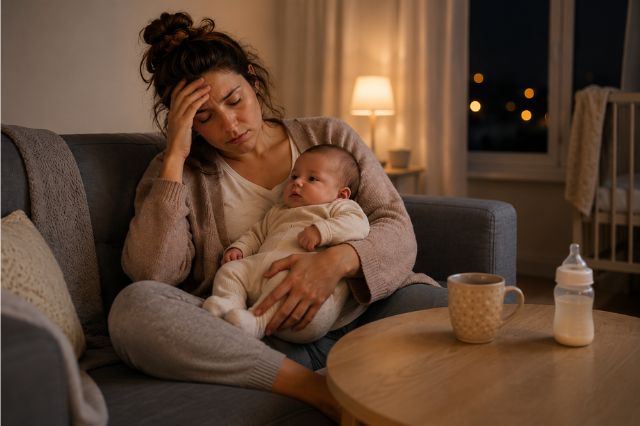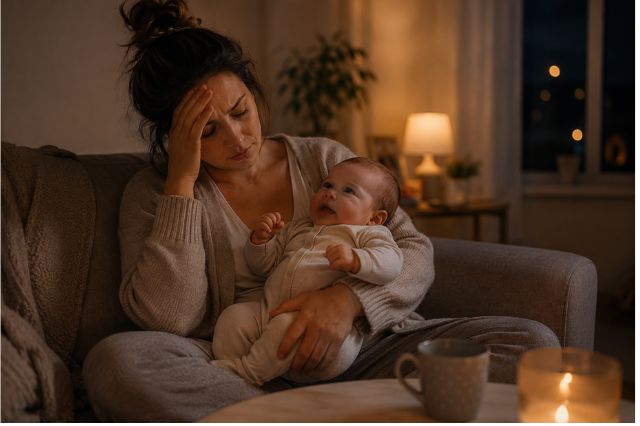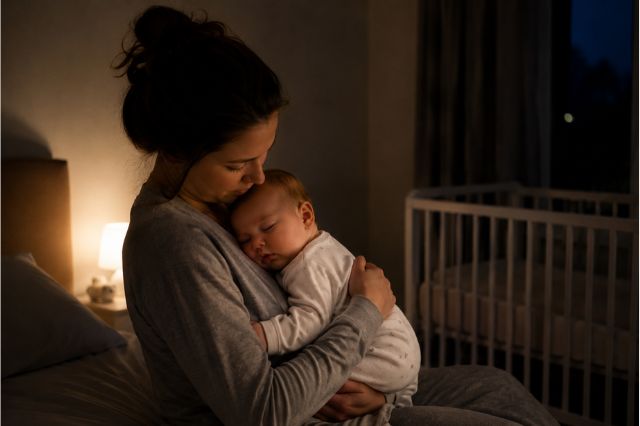


Every parent knows the feeling: the baby has finally fallen asleep, and you breathe a sigh of relief. And then: your baby only sleeps for 30 minutes and wakes up again. This phenomenon is not only frustrating but also raises many questions.
Why does my baby wake up after such a short time? Is this normal? And what can I do to help my baby get a longer, more restful sleep? In this article, we get to the bottom of these questions and offer practical solutions.
Baby only sleeps for 30 minutes: Why does this happen?
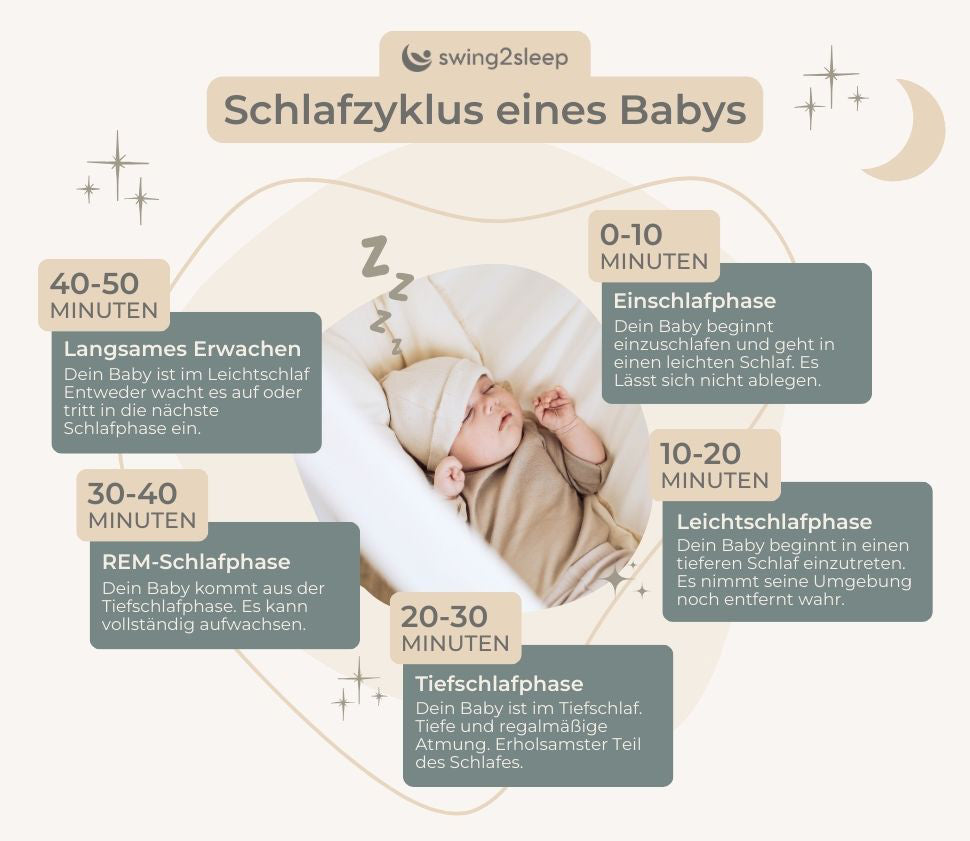
Before we look at potential solutions, it is important to understand why babies often wake up after about 30 minutes. Also known as partial waking.
1. Overtiredness
Overtiredness is a common reason for short sleep phases. When a baby is overtired, it finds it difficult to transition into the next sleep phase, leading to premature waking. Overtiredness can be caused by wake windows that are too long, irregular sleep times, or an environment that is too stimulating.
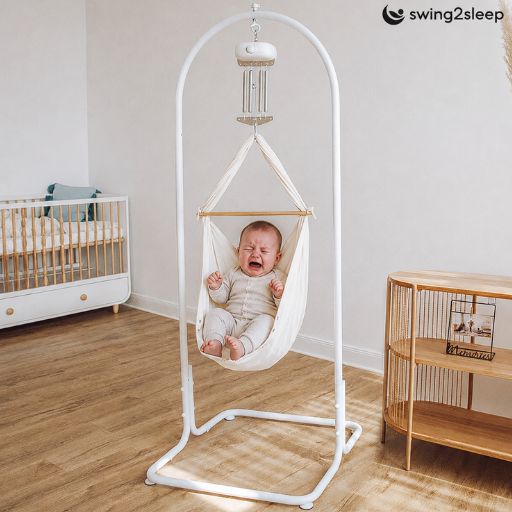
This is where smarla comes in. Through its intelligent sensors, smarla recognizes the signs of sleep phases and adjusts the swinging movements accordingly to gently rock the baby back to sleep.
Additionally, parents can monitor their baby's sleep patterns through the swing2sleep app and make adjustments to avoid overtiredness. In this way, smarla offers an effective solution and thus promotes a healthier, more restful sleep.
2. Insufficient tiredness
Paradoxically, not being tired enough can also be a reason for waking up early. If the baby is not tired enough, they will only have a short sleep phase and then wake up because they simply do not need any more sleep.
3. Strong sleep associations
Some parents use strong sleep aids such as rocking, feeding, or car rides to get their baby to sleep. However, these methods can be problematic if the baby learns to fall asleep and stay asleep only under these conditions.
4. Change in sleep environment
If the baby falls asleep in one environment (e.g., in the mother's arms) and is then moved to another (e.g., their own bed), this can lead to waking up. Babies are very sensitive to changes in their environment and can wake up when they realize something is "not right".
What can you do if your baby only sleeps for 30 minutes?
Now that we know the main reasons for waking up early, let's look at some solutions.
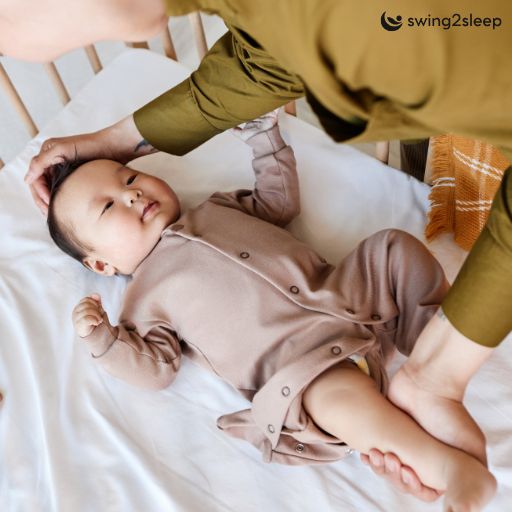
- Optimize the sleep environment: A quiet, dark, and cool environment can work wonders, especially during a full moon. Blackout curtains, a swing2sleep automatic baby hammock, or white noise and a pleasant room temperature can help your baby sleep longer. The baby should be optimally dressed for the sleep environment.
- The right bedtime routine: A consistent routine before bed signals to the baby that it is time to settle down. A warm bath, a massage, reading a book, or gentle rocking can be part of this routine.
- Avoid sleep training programs: The so-called Ferber method is intended to teach babies to fall asleep alone. The idea: the infant is placed in their crib while awake and regardless of whether they cry or scream - parents are only allowed to go to them after a certain, increasingly longer period of time, but not pick them up. However: if a crying baby is largely left to themselves, the small body is flooded with harmful stress hormones. They will eventually fall asleep, but only out of exhaustion. They do not learn how to fall asleep, but rather that they cannot rely on their parents' protection. A baby sleep coach can help in this situation to choose a method that suits your family.
- Adjusting wake windows: Make sure your baby is not awake for too long or too short. The optimal wake window varies depending on the baby's age and can be between 45 minutes and several hours.
Case studies
-
Case study 1: Laura noticed that her daughter Leonie always wakes up after 30 minutes because she always nurses her to sleep. After introducing a consistent bedtime routine and removing nursing from this routine, Leonie now sleeps longer.
-
Case study 2: Stephi and Ben always got their son Tom to sleep in the car. They then started a gentle method of sleep training and Tom now sleeps longer at home too.
Conclusion
A baby waking up after about 30 minutes can have various reasons. Whether it's overtiredness, insufficient tiredness, strong sleep associations, or changes in the sleep environment – there are many factors that can influence your baby's sleep. However, by understanding these factors and applying practical solutions, you can help your baby (and yourself!) get better sleep.
Additional resources
- smarla: "Sleep instead of screaming" The smart automatic baby hammock that revolutionizes baby sleep
- Book: "The Crying Baby Guide: Why babies wake up so often" Click here for the guide
- Baby won't sleep: Here we have tips for better baby sleep