

How does the sleep pattern change in the 10th month?
In the tenth month, many babies show a significantly more stable sleep rhythm. Most babies at this age continue to need about 12 to 15 hours of sleep per day, distributed between a longer night sleep and two naps during the day. The daily routine becomes more structured, which helps the body to better regulate waking phases and sleep times.
In this developmental phase, not only do motor skills – such as free crawling or pulling up – continue to increase, but also the need for routines and security. Many parents report that their babies now settle down more reliably in the evening – provided there is a fixed structure around bedtime.
It is also typical that the last nap of the day now ends earlier to avoid over-tiredness before night sleep. A clear daily routine with fixed bedtimes can help make this transition smoother.
In the 10th month, your baby's sleep begins to solidify noticeably – fixed naps, a predictable daily routine, and a clear evening rhythm help your baby to orient themselves better and get enough sleep.

Why do some babies suddenly sleep worse at this age?
The topic of baby sleep at the age of 10 months can sometimes puzzle parents. Although the rhythm actually seems stable, many babies suddenly experience restless nights again. This is completely normal and often simply a sign that your child is currently processing a lot.
In a 10-month-old baby, motor and cognitive skills develop rapidly. New movement patterns, pulling up on furniture, or safe crawling can lead to your baby being more active at night or having a harder time settling down. This change influences not only the sleep requirement but also the way your baby sleeps.
In addition, many 10-month-old babies perceive their surroundings much more consciously. They recognize whether caregivers are nearby – and miss them as soon as they lie alone in their crib. Especially when falling asleep or after waking up at night, this new perception can lead to uncertainty.
If your baby is currently sleeping worse, it doesn't mean that something is going wrong. Rather, it shows that sleep changes along with development. With a loving approach, familiar closeness, and a reliable sleep routine, your child usually finds their way back to more sleep and a calmer rhythm quickly.
What helps your baby particularly well with falling asleep now?
At ten months, many babies are very active during the day – they explore their surroundings or perhaps already stand with a little help. This abundance of impressions can make falling asleep in the evening more difficult. This makes it all the more important to let the day wind down gently.
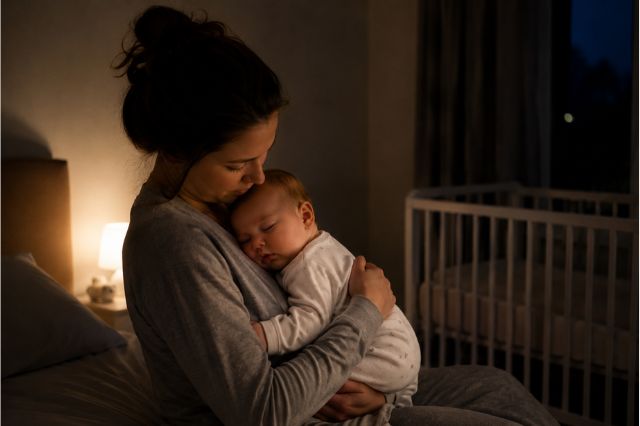
A quiet start to the evening, a predictable bedtime, and familiar bedtime rituals help your baby to better manage the transition into sleep. Whether it's a quiet melody, a soft conversation, or dimmed light – consistent elements provide orientation and create security.
The sleep environment also plays a role: a cozy crib in which your baby feels comfortable is just as crucial as the right time for falling asleep. Some babies now show clearly when they are tired – reacting sensitively to these signals can prevent falling asleep problems.
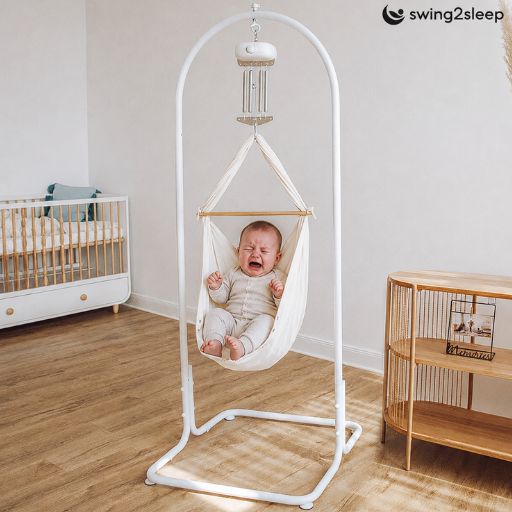
Some parents also report that their baby reacts particularly well to gentle, rhythmic movements. Products like an automatic baby hammock motor from swing2sleep can support in this phase when falling asleep is difficult – especially after particularly active days.
What is important here is that you do not demand too much of your child. Falling asleep is not a performance process, but a habit that may develop with loving support and peace.

What helps against nighttime waking for your baby in the 10th month?
In the tenth month, many babies wake up more frequently at night – this is completely normal and often related to developmental phases. Your baby processes new impressions, becomes more aware of their surroundings, and reacts more sensitively to changes in the sleep environment.
It is helpful to facilitate the transitions between sleep phases: a consistent stimulus pattern such as quiet background noises, a familiar sleep scent, or constant light conditions can support your baby in finding their way back to sleep more easily after waking up.
A short check-in – i.e., waiting briefly and then calming quietly but reservedly – also helps many babies to develop more self-regulation at night without getting used to permanent sleep aids. Additionally, pay attention to the balance of daytime sleep: two naps, not too late in the afternoon, help to avoid over-tiredness and stabilize night sleep. Small adjustments in the daily routine can often be enough to reduce nighttime waking.
Sources:
(1) Babyartikel.de – Baby 10 Monate: Alles über Schlaf, Essen & Entwicklung https://www.babyartikel.de/magazin/baby-10-monate-alles-ueber-schlaf-essen-entwicklung
(2) Parents.com – 10-Month-Old Baby: Sleep, Growth & Development https://www.parents.com/10-month-old-baby-8575447
(3) dm.de – Entwicklung: Baby 10 Monate https://www.dm.de/tipps-und-trends/baby-kleinkind/entwicklung/baby-10-monate-86566
(4) Kindergesundheit-info.de – Babyschlaf (0–12 Monate) https://www.kindergesundheit-info.de/themen/schlafen/0-12-monate/babyschlaf/