

Anything that rocks or bounces not only helps babies sleep better, but also has other enormous benefits for your child's development. That's why many parents soon ask themselves whether a cradle or hammock might be worthwhile for their little one.
And because more and more parents are asking themselves this question, the market for such products is becoming larger and more confusing.
Two systems in particular stand in competition with each other: the baby hammock and the automatic baby hammock. We have looked at and compared both.
In this automatic baby hammock comparison, we show you the most important differences between a baby hammock and an automatic baby hammock, explain the advantages and disadvantages, and help you find the right solution for your baby.
Quick comparison: Baby hammock vs. automatic baby hammock
| Criterion | Baby hammock | Automatic baby hammock |
|---|---|---|
| Movement | Side-to-side rocking | Vertical bouncing |
| Mounting | Usually 2 points or stand required | 1 suspension point is sufficient |
| Suitability for everyday use | Frequent pushing required | Motor possible, runs without pushing |
| Closeness / Security | More open depending on the model | Often narrower, "snuggled in" feeling |
| Mobility | Possible with stand, otherwise inflexible | Ceiling, door clamp or stand possible |
| Who is it often a good fit for? | Larger babies, cozy rocking | First months, sleep routine, relief |
Automatic baby hammock comparison: Baby hammock or automatic baby hammock?
There are clear differences between the two approaches, which we will take a closer look at below to provide you with some guidance.
Baby hammock compared to the automatic baby hammock
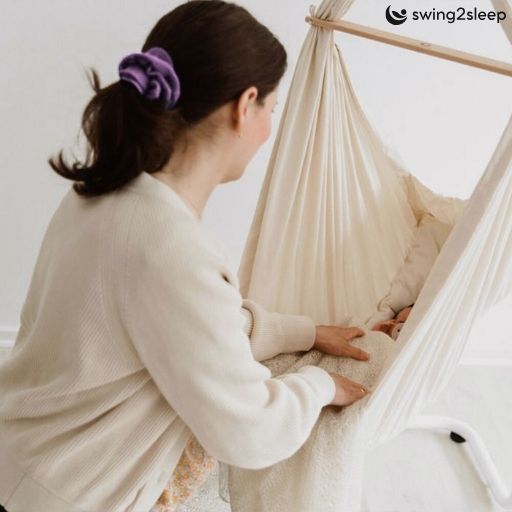
A classic baby hammock is basically not much different from a hammock for adults.
For many, the classic hammock is the epitome of relaxation. You can really unwind while gently swinging back and forth. And babies like it just as much as we adults do. However, a hammock also requires two attachment points.
So, unless you happen to have two walls at exactly the right distance in your house, you won't be able to avoid using a suitable stand when using a baby hammock. Many manufacturers also offer such a stand in a bundle with the hammock.
Another disadvantage is that the hammock has to be pushed by hand again and again. It then rocks again for a few minutes – hardly enough time to get one thing or another done in between. You have to stay on the spot to give the hammock the next push at the right moment.
Furthermore, a hammock is not as cozy and snug as an automatic baby hammock. However, smaller babies in particular love the snugness because it makes them feel completely secure – almost like in mommy's belly.
In general, a (baby) hammock is a great thing, especially for older babies, and later provides the right chill feeling in the child's or teenager's room.
Automatic baby hammock in comparison: Advantages over the hammock
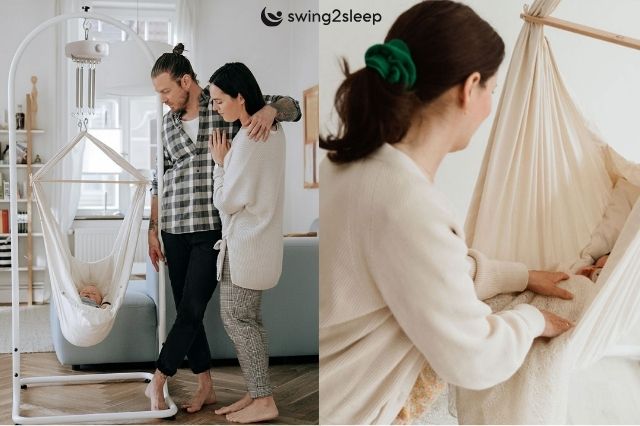
In contrast to the baby hammock, an automatic baby hammock only requires one suspension point directly above it. But that is by far not the most important difference. Much more significant is that the automatic baby hammock does not swing from side to side like a hammock, but bounces up and down.
Experience shows that the vast majority of babies actually much prefer the vertical bouncing to the lateral rocking and also find it much more sleep-inducing. A clear plus point for the automatic baby hammock.
Automatic baby hammock vs. baby hammock in direct comparison:
| Criterion | Baby hammock | Automatic baby hammock |
|---|---|---|
| Movement | lateral rocking | vertical bouncing |
| Sleep aid | good | usually very effective |
| Duration of movement | short, manual | long-lasting due to springs |
| Motor possible | no | yes |
| Snugness & security | medium | high |
| Flexibility | limited | very high |
More restful and better sleep through rocking
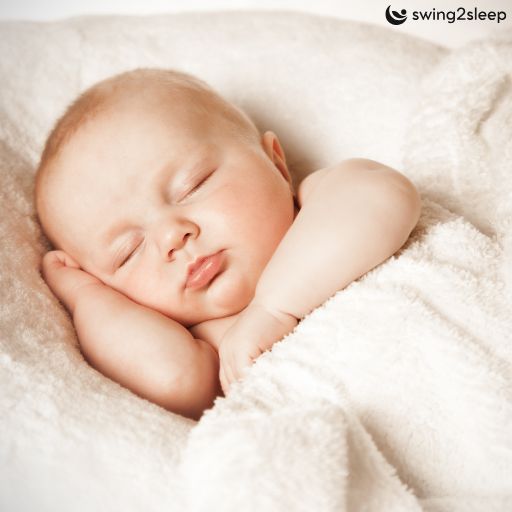
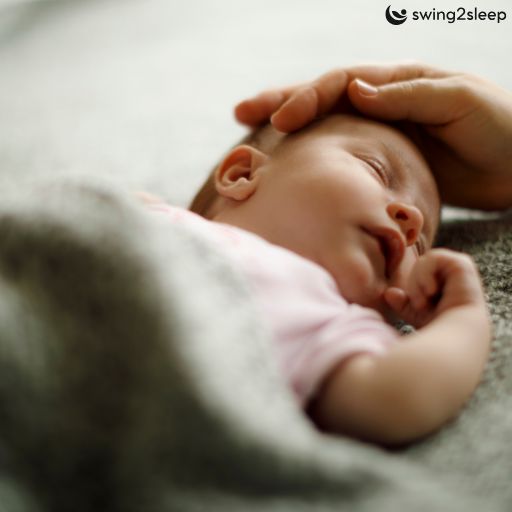
The gentle up and down swinging calms the baby quickly because it reminds them of their time in mommy's belly. Steady rocking movements help your baby fall asleep and ensure they sleep through the night better.
Rocking calms. When the baby is still in its mother's belly, it floats weightlessly in the amniotic sac, so to speak. It is only motionless there when the mother is sleeping. However, when she is active during the day, the child is constantly rocked around. So for a full 9 months, the baby knows nothing other than rocking.
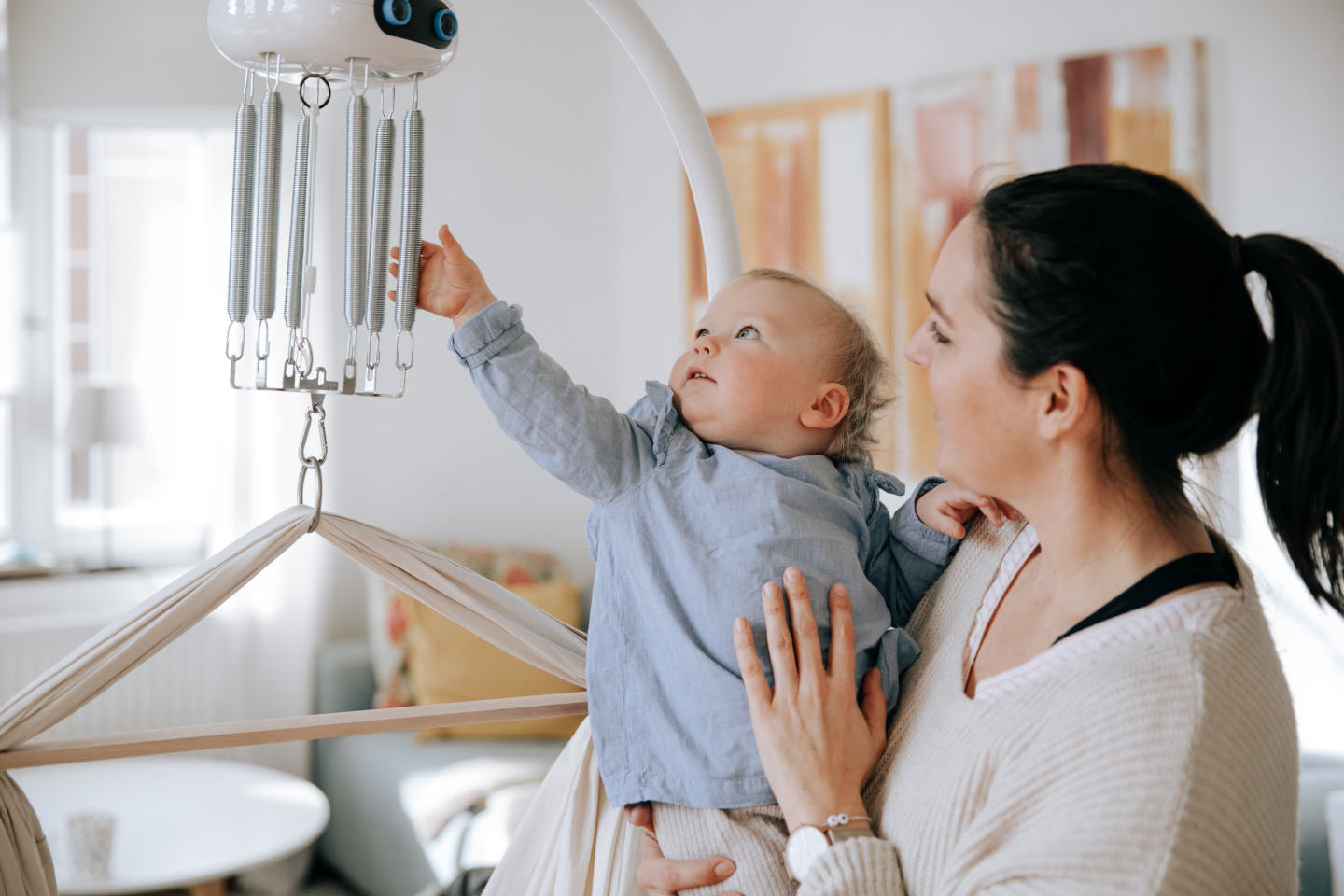
The name "automatic baby hammock" already hints at it: In the best case, there are several integrated springs above the cradle, which ensure that the bouncing is particularly gentle. But above all, bouncing with several springs lasts longer.
The springs are therefore the actual core element of an automatic baby hammock, which make its effectiveness possible in the first place. For the baby, rocking in an automatic baby hammock is an extremely pleasant thing and you as parents can be happy about not having to lend a hand again after a short time.

Rocking promotes the senses!
But rocking in a hanging cradle has another significant advantage besides calming and better sleep: it also promotes your baby's senses.
Rocking stimulates the sense of balance and that is better than any occupational therapy! This sense is also called the vestibular sense. Simultaneously with the rocking, the baby's sensory development is also promoted, and even older children still love to rock.
If the baby automatic baby hammock is also a motorized model like our swing2sleep, the annoying pushing is also eliminated. The integrated motor ensures that the automatic baby hammock keeps swinging – an enormous relief for stressed parents!
A baby hanging cradle is therefore a great investment, especially for the first months of the child's life. Your baby enjoys the rocking and falls asleep peacefully almost on the spot, while parents can enjoy having a little breather in this turbulent time.
Babies love the closeness
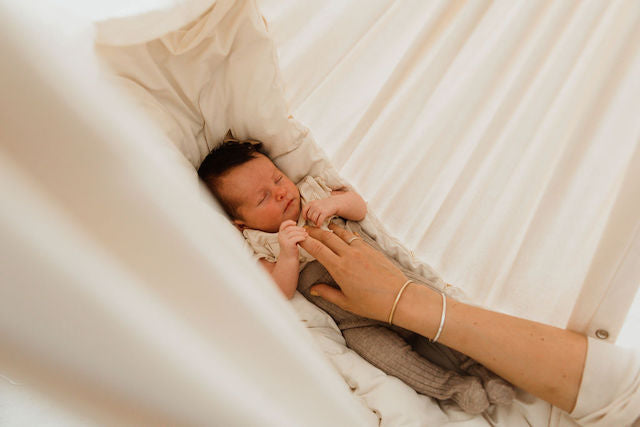
The closeness also speaks for a hanging cradle. Just like in mommy's belly, the baby feels a clear boundary around them in a baby hammock or hanging cradle. Babies don't need a big bed with lots of space – quite the opposite. Only when it is really snug is it also cozy.
And due to the single suspension point, automatic baby hammocks clearly have the edge over hammocks in terms of closeness. This makes them the optimal solution, especially for the very little ones, because when it is cozy and snug, they sleep better and feel secure.
Flexible suspension
Because only one attachment point is required for an automatic baby hammock, it offers significantly more flexibility than a hammock, which requires two opposite hooks at a certain distance.
An automatic baby hammock is often mounted on a sturdy hook in the ceiling. However, the door clamp shown below for attachment to the door frame offers even more flexibility. With it, the automatic baby hammock can be taken into practically any room – also very practical when traveling!

Hammocks are also available with a stand, but the options of a ceiling hook or even a door clamp are eliminated. This makes an automatic baby hammock both more practical and significantly more mobile, because it can be used almost anywhere.

The right posture
After birth, infants still have a curved spine. The double-S shape required for upright walking only develops after one to one and a half years. Therefore, a surface that supports a curved back is ideal, especially for smaller children.
The right posture plays an important role, especially in the first months of life.
Both the hammock and the automatic baby hammock fulfill this requirement and are therefore particularly child-friendly. If you want, you can still place a thin mattress in the cradle.
Conclusion
In a direct comparison, the automatic baby hammock clearly comes out on top. It is more practical, more flexible, and more comfortable for children than a hammock. Its vertical movement is also better suited than the sideways swinging of the hammock. Models with a motor are particularly advantageous because they relieve parents of the tiring task of pushing.
The swing2sleep Automatic baby hammock gives your baby peaceful sleep as well as a cozy, secure feeling – and you as parents a few quiet hours – what more could you want?
Frequently asked questions about the automatic baby hammock comparison
Which automatic baby hammock is the best?
The best automatic baby hammock fits the baby and your everyday life. Decisive factors are stable fastening, high-quality materials, a suitable spring for the weight, and a calming, even movement. If you frequently need relief in everyday life, a model with a motor can be useful because you don't have to constantly push.
How long can a baby stay in the automatic baby hammock per day?
This depends on the age, development, and manufacturer's instructions. It is best to use the automatic baby hammock as support for short sleep phases and rest periods and keep an eye on your baby. If you are unsure, clarify the use with your pediatrician and adhere to the weight and age limits.
Which automatic baby hammock is the quietest?
With motorized automatic baby hammocks, the volume depends heavily on the motor, the suspension, and correct assembly. A smoothly running motor, stable fastening, and the right spring set can reduce noise. Also make sure that no parts rub against each other and that the surface does not vibrate along with it.
What do midwives say about automatic baby hammocks?
Many midwives see automatic baby hammocks as a helpful relief when babies find it difficult to settle down, especially in the first few months. Safety, supervision, and correct use remain important. Follow the manufacturer's instructions and do not use an automatic baby hammock as a substitute for a safe sleeping environment, but as a supportive tool in everyday life.