The birth of one's own child is an absolute state of emergency, suspended between hope and fear, pain and happiness, and sometimes even life and death. Without exaggeration, it can be described as a transformative act.
The lives of the parents will never be the same as they were before their child's life began. In such an existential extreme, a feeling of powerlessness can easily arise during the course of labor. And when that happens, the wounds can go particularly deep due to the absolute vulnerability.
A birth trauma is a serious psychological injury resulting from violence during birth, regardless of whether it involves emotional or physical injuries. But what exactly is a birth trauma? What long-term consequences can a traumatic birth of a child have? And how can one process such a birth? We clarify these and other questions in the following article.
Birth trauma – an injury to the soul
Many mothers experience an absolutely harmonious and wonderful pregnancy. The birth of one's own child is the crowning conclusion. At the same time, it marks the transition into a new, exciting phase of life.
Despite all the anticipation, many expectant mothers are aware that a birth is not always easy and sometimes represents a true feat of strength.
But what actually happens when mothers feel after the birth of the baby as if they are internally frozen, feel totally abandoned, or have the feeling of having been ignored during the birth? What if an intervention is performed without obtaining consent beforehand?
When do we speak of a birth trauma?
When birth trauma is mentioned, most people associate it less with the mother than with the newborn baby. But violence during birth is unfortunately not a rarity. Instead of a self-determined birth experience, those giving birth experience the birth of the child as a traumatic event.
Not every woman affected by violence during birth is also affected by a birth trauma, yet the typical symptoms are also found in women who think they have given birth without violence. Many traumatized mothers experienced complications during birth as dramatic, were not correctly informed, or physical violence turned the delivery into a nightmare.
Birth trauma in the baby
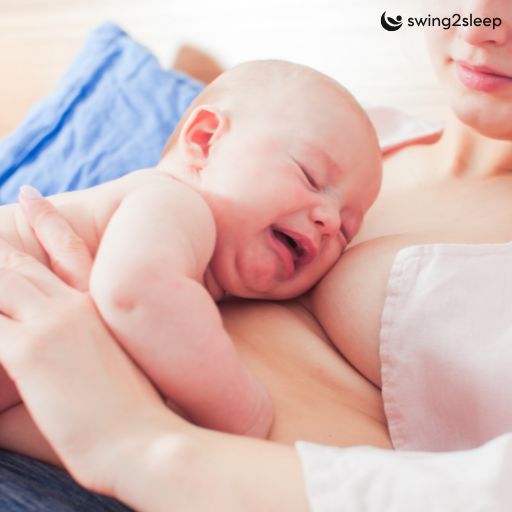
It is also quite possible that your baby perceived their own birth as traumatic. For each of us, birth was stored deep in the subconscious. Therefore, it is possible that your baby wants to communicate the experienced pain through long-lasting crying over and over again. The Austrian psychoanalyst Otto Renk called birth an "overwhelming anxiety experience" for the fetus and held the thesis that every single person is traumatized by their birth.
Nevertheless, not every child is a high-need baby and usually the start in life seems to be processed well. Even if aggravating complications such as a C-section or even a forceps delivery are added, it depends on many different factors whether traumatization occurs, how severe it is, and what your baby needs to resolve it.
The topic of birth trauma: The long-term consequences
Many women do not even know that a traumatic birth can later be a trigger for various illnesses. The term "trauma" comes from Ancient Greek and means "wounds".
While it is also used in medicine for physical injuries, in general usage it primarily stands for psychological wounds. If you have experienced a traumatizing birth, this can later manifest in the form of various symptoms, e.g., flashbacks, such as thoughts, images, or words that suddenly flash in your head, or if you cry often and seemingly for no reason.
All of these are attempts by your psyche to process what you have experienced. It is also common for those affected to feel guilty, because mental suffering unfortunately still carries the stigma of personal failure. Remind yourself again and again: It is not your fault.
Signs of birth trauma
Do you have symptoms related to mental illnesses caused by childbirth and are still struggling with birth trauma three months later? Seeking professional help is not a failure. This applies especially if you notice that you can no longer cope with your everyday life.
This important topic is also the subject of a double episode of Vollzeit Müde – The parenting podcast by swing2sleep entitled "How to manage to stay connected with your excessively crying baby after a difficult birth". In both parts of this episode, our Anika hosts prenatal psychologist Anabel.
Anabel not only accompanies women during and after birth, but also supports expectant mothers during pregnancy to strengthen the bond with their unborn baby. After traumatic births, she is on hand to intervene early and stabilize the bonding system between mother and child in good time.

Processing the birth: Tips and help
After a particularly difficult and stressful birth, our self-healing powers may not be enough. In addition to a debriefing of the birth, for example with a trauma expert or a psychotherapist, it is advisable to also take measures at home to process the birth experience.
The art of abdominal breathing
Abdominal breathing is an important self-healing tool that can be used excellently to calm the autonomic nervous system.
Real closeness to your child is only truly possible if there is also an inner connection to your own body. Long-lasting crying of your baby or experiencing a traumatic birth activates the sympathetic nervous system. This is the part of our autonomic nervous system responsible for stress reactions such as an increased heart rate and the release of adrenaline.
When you have your baby in your arms and the sympathetic nervous system is activated, you can bounce on the exercise ball for as long as you want. Your breathing will still be shallow, your muscles will remain tense, and stress hormone release will be in full swing. By consciously breathing into your abdomen, you can bring more relaxation to yourself and your baby in everyday life.
The swing2sleep also provides relaxation for parents
Another great help can be our swing2sleep automatic baby hammock. Many babies immediately feel transported back to their time in the womb thanks to the rhythmic rocking and cozy closeness in the hammock.
This gives them a sense of security in which they can easily relax. Especially with a high-need baby, such moments of silence are particularly valuable, so use them wisely to gradually leave the trauma behind and gain strength.
Many women suffer from trauma
Given the extreme situation of childbirth, trauma can occur for the mother or child. Unwanted episiotomies, forceful birth attendants and midwives, being forced to lie down during birth, or having pressure applied to the abdomen with force—there are many different situations that people classify as a traumatic experience.
Having a child often makes women feel they should only feel gratitude and must push negative feelings aside. In most cases, the psyche processes this with its own self-healing powers. In very severe cases, professional help is available to support you.
But the area between very mild and very severe is not a no-man's-land. With techniques like abdominal breathing and aids like the swing2sleep, you have a wide portfolio of tools at your disposal to master this crisis together and strengthen your bond.