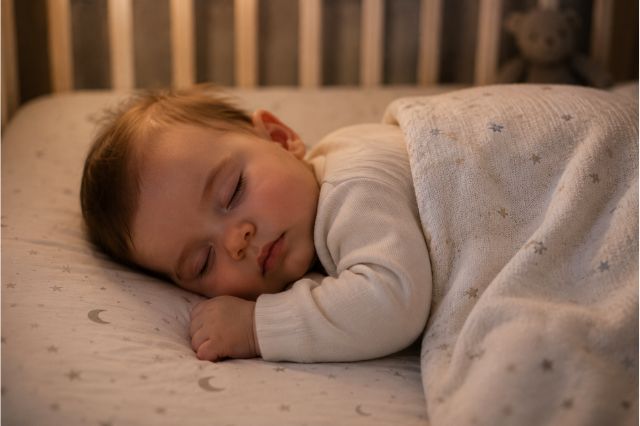


Newborns sleep an average of 17 hours a day. This can be unsettling for some parents. During longer sleep phases, their child sometimes lies there as if lifeless, and they are not sure if it is even still breathing. In most cases, however, the concern is unfounded.
Breathing pauses in babies and so-called "periodic breathing" are completely normal in the early days. We'll tell you what you need to look out for and when action is actually required.
Sudden breathing pauses in babies: All-clear or alarm signal?
It is completely normal for babies to sleep a lot. During sleep, they process all the impressions that flood in during their waking phases. They also learn while they sleep. So while they may appear to be slumbering peacefully from the outside, their brain is working at full speed and making important developmental steps.
Parents also observe that their infant's breathing stops every now and again. Such breathing pauses can sometimes last up to 20 seconds. This phenomenon is called "periodic breathing" and repeatedly causes moments of fright for parents. But don't worry: it is a completely normal phenomenon in infants.
Babies have not yet developed a regular breathing pattern. Instead, breathing pauses can alternate with hasty breaths. However, it also depends on which sleep phase your baby is currently in; they breathe differently in the deep sleep phase than in the dream phase.
What parents should look out for in newborns
Although breathing pauses and periodic breathing are common in infants, the subject should still not be taken lightly. There are certainly warning signs and signals to which you should react immediately.
These include, for example, breathing pauses that last longer than 20 seconds. Try to observe your baby's breaths closely and count how much time passes between them. If the pauses regularly last longer than 20 seconds, you should definitely have this checked by a doctor.
Caution is also advised if the lips or face turn bluish. The blue coloration can be a symptom of oxygen deficiency. You should call the emergency services immediately, as it could be a serious problem.
Slowed or decelerated breathing should also be checked by a doctor. If the doctor determines that your child is at increased risk, they can be given a monitoring device: if breathing stops during sleep, an alarm is triggered.
If your baby is breathing with difficulty or making respiratory noises, it could be a cold or a respiratory infection. It is best to visit your pediatrician and have your baby examined.

How can you make sure that your baby is still breathing while asleep?
If the baby is remarkably quiet while sleeping, you might wonder from time to time whether they are still breathing. Fortunately, this is very easy to find out.
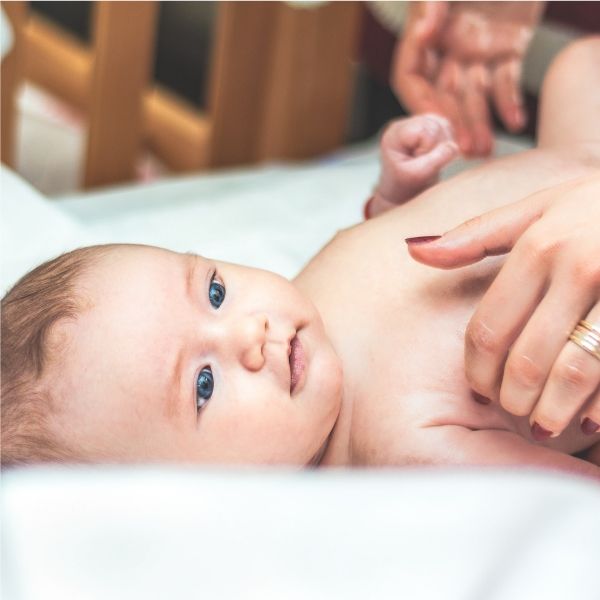
For example, place your hand on the baby's chest and feel the up-and-down movement. You can also move your face close to your baby's nose and mouth so that you can listen to their breaths.
Breathing pauses in babies: Causes
Because a baby's heart beats faster than an adult's, they have to breathe much more frequently. During sleep, this can sometimes sound like a snort accompanied by a whistling sound. After the long time in mom's belly, babies first have to get used to the new stimuli that bombard them day in and day out.
During pregnancy, they did not yet have to breathe independently. They received oxygen directly via the umbilical cord. After birth, they essentially still have to practice breathing – the respiratory center is not yet fully developed at birth.
Furthermore, at this point there is still amniotic fluid in the lungs that first needs to be broken down. This could also be the cause of the noticeable breathing sounds that the baby makes while breathing.
There is also a special consideration for premature babies. They can suffer from apnea of prematurity, which is caused by the immaturity of the respiratory center in the brain.
This condition leads to pauses in breathing that occur without a specific cause and are often accompanied by a slowed heart rate. If your baby is a preemie and has pauses in breathing, you should definitely consult a doctor.
The baby's breathing changes over time
Your baby's breathing changes gradually. In the first months of life, an infant breathes about 30–60 times per minute, whereas a toddler only breathes 20–30 times.
From the age of 6 months at the latest, periodic breathing decreases significantly. From then on, the problems should be a thing of the past.
Create the right environment for healthy sleep
Your baby's breathing is not only influenced by physical causes. Their sleeping environment can have a major impact on their breathing.
We have summarized some important tips for you:
- Back position: Make sure that your baby sleeps on their back. This position promotes healthy breathing and reduces the risk of Sudden Infant Death Syndrome (SIDS).
- Own bed: Your baby should sleep in their own bed. Place it directly next to the parents' bed so that monitoring their breathing is easily possible.
- Room temperature: When your baby sleeps, the temperature should not be too high. Ideally, it should be between 18 and 20 °C so that your baby does not overheat and gasp for air.
- Sleeping bag instead of blanket: Your baby should not sleep with a blanket. This can slip over their face and negatively affect breathing.
- Ventilation: To ensure your baby is optimally supplied with oxygen, there should be good air circulation. Ventilate the room so that your baby breathes in healthy air.
These measures can help you minimize pauses in breathing and reduce potential risks. If you nevertheless notice that your baby has sudden pauses in breathing, you should consult a doctor for safety.
Automatic baby hammock from swing2sleep ensures optimal air circulation
You now know how to create the best conditions for your baby's healthy sleep. The little one's bed or cradle plays a decisive role in this.
In the innovative automatic baby hammock from swing2sleep, the child lies in a close-meshed net that ensures optimal air circulation. This ensures that your baby's oxygen supply is always guaranteed. In addition, they lie on their back in the hammock and can relax as much as possible in their cozy nest.
The swing2sleep team sincerely wishes all families a healthy sleep.
Conclusion: Monitor the breathing of newborns and watch out for warning signs
If your baby is lying completely still and sleeping, there is usually little cause for concern. Even occasional pauses in breathing, sighing, or loud breathing are perfectly normal on their own during the first months of life and resolve themselves.
What to do if the baby has pauses in breathing?
If you observe breathing pauses, stay calm and look closely. Short pauses of a few seconds can occur in babies.
If your baby appears relaxed, the skin color remains normal, and breathing starts again on its own, attentive observation is often sufficient.
If breathing pauses occur more frequently, last longer, or if you notice blue discoloration, severe restlessness, or unusual lethargy, please seek medical advice immediately.
What to do if the baby stops breathing during sleep?
Babies often breathe more irregularly than adults during sleep. Short pauses can be part of the first few months.
Watch whether your baby continues to breathe independently afterwards, moves normally, and shows no unusual color changes.
If breathing stops for a longer period, your baby appears limp, or does not find a normal rhythm on its own, you should seek medical help immediately.
What do breathing pauses in babies sound like?
Breathing pauses themselves are usually hardly audible because no breathing sound is produced during this time. Often, an unusual silence is more noticeable.
Afterwards, breathing can resume with a deeper breath, a sigh, or a short snort.
It becomes noticeable if the breathing sounds very strained, your baby gasps for air, or appears permanently unusually restless.
How do I notice if my child has pauses in breathing?
It is often noticeable that the pause between two breaths seems longer or the chest does not visibly move for a short time.
Additionally, observe skin color, muscle tone, and behavior. If you are unsure or your gut feeling sounds an alarm, a medical clarification is always sensible.