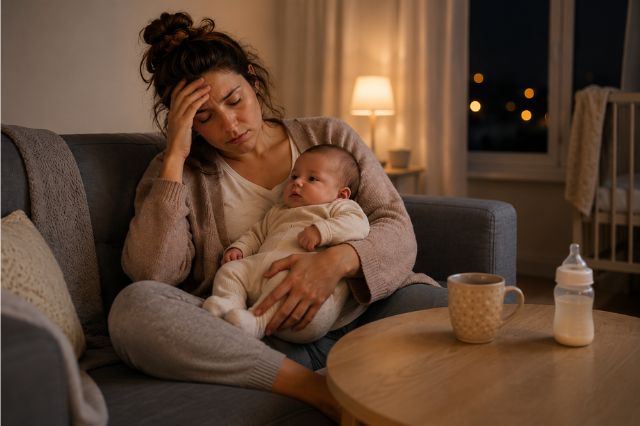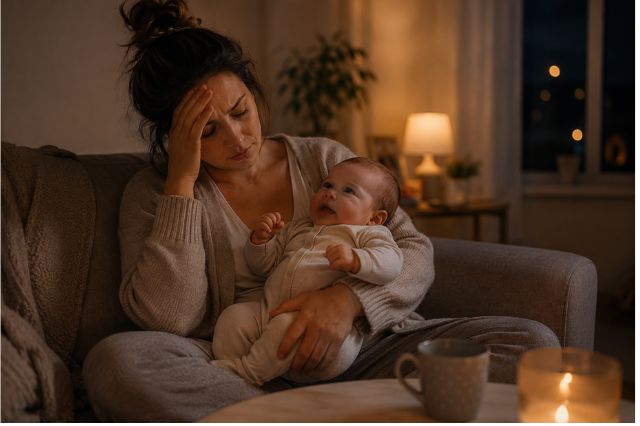


Getting a newborn to sleep sounds so simple, yet in everyday life, it can feel like a real challenge. Perhaps you know those evenings: your baby is tired, rubbing their eyes, appearing restless, and yet they just won't fall asleep.
You rock, carry, breastfeed, hum softly... and at some point, exhausted, you ask yourself: What does my baby actually need to finally settle down?
The first few weeks with your child are intense, beautiful, and often quite draining. Sleep is one of the biggest topics. This is because newborns do not yet have a fixed rhythm; they wake up frequently and need a lot of closeness.
This is not a "problem," but completely normal. Nevertheless, it can sometimes feel like an endless cycle of falling asleep, waking up, and soothing again, especially if your baby cries a lot.
Perhaps you have already tried a few things and noticed: what works today suddenly doesn't work tomorrow. That is exactly what makes this phase so challenging. It's not about finding a perfect method, but about understanding your child better and responding sensitively to their needs.
Understanding newborns: Reasons for restless sleep
If your baby finds it difficult to settle down, it is rarely because you are doing something wrong. Rather, it is due to the natural development of a small human being who has only just arrived in the world.
A newborn must first get used to this completely new world—to light, noise, hunger, closeness, and also to the feeling of tiredness. All of this is overwhelming and takes time to process.
That is precisely why it is so important to understand: it is not "bad" sleep, but completely natural behavior. Frequent waking, restless phases, or the need for closeness are part of it. Those who understand these connections can react more calmly and provide loving support.

Sleep behavior, sleep requirements & lack of rhythm
A newborn does not yet bring a fixed day-night rhythm. While you might be hoping for longer sleep phases, your baby initially lives entirely in the moment. They sleep when they are tired and wake up when they are hungry or need closeness.
Typical for this phase:
- Your baby wakes up every 2–4 hours, sometimes even more frequently
- They sleep a lot in total (14–17 hours daily, but not all at once. Many parents also ask: "How much sleep does my baby need?")
- The sleep phases are short and constantly alternate
- They need regular food and closeness, even at night
This means for you: continuous sleep, as you know it, only develops over time. Your baby follows their own biological rhythm.
The sleep structure is also special: newborns spend a lot of time in light sleep. As a result, they wake up faster, which can be exhausting but serves an important purpose. Their body ensures that they drink regularly and are well cared for.
So when you try to settle your baby, you can remind yourself: it's not about achieving "perfect sleep" immediately. It is much more important to support your baby in their natural rhythm and give them security. Over time, sleep will structure itself all on its own.
Recognizing tiredness & avoiding sensory overload
An important key to peaceful falling asleep is the right timing. Often, people wait until tiredness is clearly recognizable, but by then, this moment has often already passed.
Overtiredness leads to your child releasing stress hormones. The result: they become restless, cry more, and find it much harder to fall asleep.
Therefore, it is worth recognizing the early signals. Your child shows you very clearly when they are ready for rest, though often very subtly.
Typical signs are:
- a turned-away gaze
- slower or "glassy" eyes
- initial small whimpering sounds
- searching for your body
If you react at this moment, you can settle your baby much more easily before they are overstimulated.
Another important point is sensory overload. Every day is full of new impressions; noises, light, and movement must first be processed. This flood of stimuli can discharge particularly in the evening. Then tiredness often shows itself, but at the same time tension or restlessness.
Here it helps to consciously slow down: dimmed lights, quiet voices, little movement. A relaxed atmosphere signals to your baby that it is now safe to let go.
If you keep an eye on these two factors—tiredness and stimuli—it will be much easier for you to gently support your baby and help them fall asleep.
Getting a newborn to sleep: What helps?
When you support your baby in falling asleep, you quickly notice: there is no single perfect solution. Every child is different, every day goes a little differently, and that is completely normal.
Getting a newborn to sleep does not mean strictly implementing a method, but lovingly finding out what is good for your child in that moment.
In the first few weeks, one thing above all plays the biggest role: security. Until now, closeness, warmth, and gentle movement were a matter of course. The world outside, by contrast, is new, vast, and sometimes overwhelming. All the more, familiar, calm stimuli help to find peace more easily and glide gently into sleep.
Many parents intuitively start right there, and that's a good thing. Carrying, rocking, breastfeeding, or speaking softly are not "habits that need to be broken," but important tools for supporting your child.

7 gentle tips that really help in everyday life
Sometimes it's small changes that make a big difference.
You can easily integrate these tips into your daily routine:
- Pay attention to the right timing: Don't wait too long, but support your child at the first signs of tiredness.
- Create a calm atmosphere: Dim the lights and reduce noise, especially in the evening.
- Establish a small routine: Recurring sequences give your baby security.
- Use your closeness consciously: Physical contact is often the most effective sleep aid.
- Movement can soothe: Gentle rocking or carrying is reminiscent of time in the womb.
- Avoid sensory overload: Too many impressions make it harder to fall asleep.
These small steps help you understand needs better and create a relaxed sleep situation.
Using proximity, movement & security purposefully
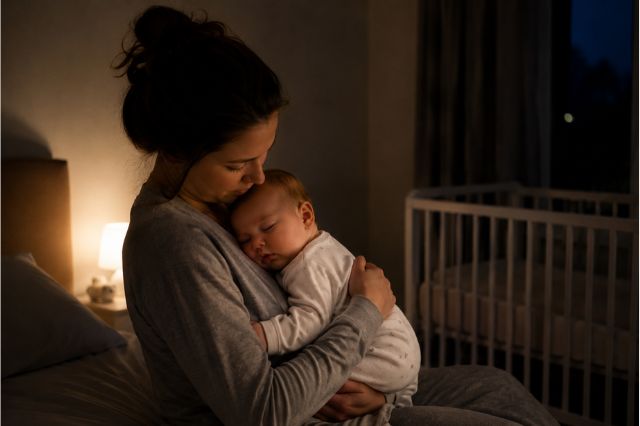
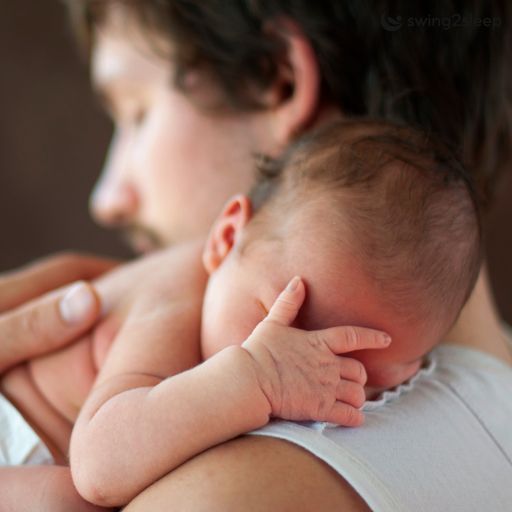
Especially in the first weeks of life, proximity is the key. Your baby cannot regulate themselves yet; they need you to feel safe. Your heartbeat, your voice, your warmth: All of this has a calming effect and helps your baby let go.
That is why it is completely natural that many babies fall asleep best in your arms or can be calmed by gentle movement. Rocking a newborn or carrying them activates the vestibular system and signals to the body: Everything is fine.
The important thing is not to avoid this support, but to use it consciously. You are allowed to accompany them and gradually create gentle transitions by slowly reducing the movement before sleep sets in.
If your child demands a lot of proximity, you are not alone, by the way; many parents know exactly this phase, often described as "baby only sleeps on me".
Over time, more and more trust in these processes develops. Exactly this feeling of security is the foundation for falling asleep gradually becoming easier.
The right sleep environment makes a big difference
In addition to proximity and timing, the environment also plays a decisive role. A suitable sleep environment helps to find peace faster and fall asleep more relaxed. Especially in the first weeks, babies react very sensitively to external stimuli.
Above all, it is important that the environment is quiet, low-stimulus, and predictable. Your child should feel: This is a safe place where I am allowed to let go.
Pay attention to a few simple things:
- Dimmed, warm light instead of bright glare
- As little noise as possible or sudden sounds
- A pleasant room temperature (approx. 16–19 degrees)
- A quiet, clear sleeping area without visual distractions
Additionally, it can help to consciously "wind down" the room the closer bedtime gets. Less movement, quieter speaking, and a relaxed atmosphere automatically signal to your baby that it is now time for rest.
Small, recurring routines in the same room also support your child in linking sleep with a specific place. These can be very simple things like a quiet song, a short moment of cuddling, or putting on the sleeping bag.
Over time, this creates a familiar environment that provides orientation. This feeling of security forms the basis for finding peace more easily and making relaxed sleep possible in the long term.

Accompanying sleep instead of forcing it
One of the most important thoughts of all: Your baby does not have to "learn" to fall asleep alone. In the first months, it is more about accompanying them lovingly. Pressure or rigid expectations often lead to stress, for you and for your baby.
If you notice that your baby is becoming restless, do not try to force sleep. Instead, it helps to pause for a moment and consciously accompany your baby. Especially if your child keeps startling while falling asleep, there is often a sensitive nervous system behind it that still needs support.
In everyday life, these approaches can help you:
- Stay calm: Your composure is transferred to your baby
- Create gentle transitions: Do not put them down abruptly, but release slowly
- Give proximity: Carrying, stroking, or speaking softly
- Allow repetition: Several attempts are completely normal
Falling asleep is not a goal that must be reached quickly, but a process. If you give your baby time, trust develops and that is exactly what helps them in the long term to find peace more easily, because sleep aids for babies also work best when they suit you individually.
Mastering challenges in everyday life & avoiding mistakes
Everyday life with a newborn is rarely predictable and that is exactly what often makes sleep so challenging. There are days when everything goes well, and then again phases in which hardly any peace returns.
Many of these situations are completely normal. This makes it all the more important to stay flexible and understand the needs better.
You don't have to do it all alone. Gentle support in everyday life can relieve you and give your child security. Carrying, speaking softly, or gentle rocking help with falling asleep, but are also exhausting in the long run.
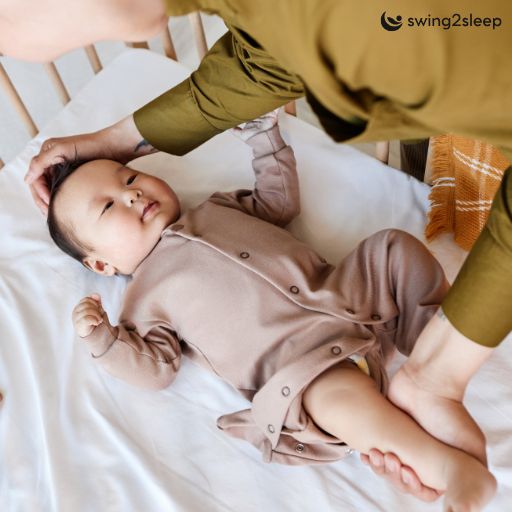
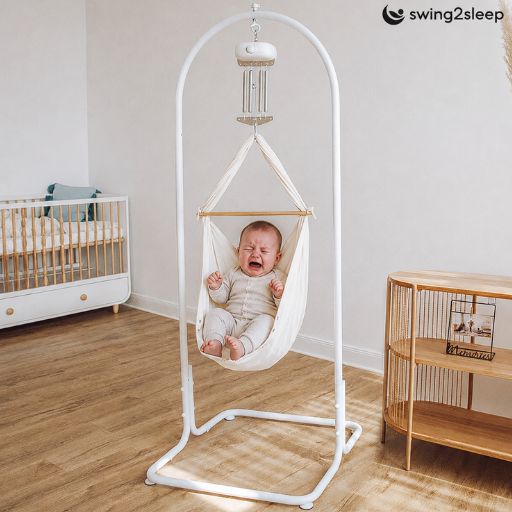
This is exactly where an automatic baby hammock can be a real support. It mimics the gentle, even movements that your child already knows from the womb. This rhythmic movement has a calming effect on the nervous system and helps your baby find peace more easily.
The Heia automatic baby hammock can relieve you in everyday life on several levels:
- Gentle movement without manual rocking: your baby is calmed while you can take a quick breath
- More relaxation for your baby: even impulses help with switching off
- Support during restless phases: especially helpful with sensory overload or in the evenings
- More flexibility in everyday life: you have your hands free without putting your child down
Especially if your baby demands a lot of proximity and movement, an automatic baby hammock can be a valuable addition, not as a replacement for you, but as support.
At the same time: There is no single right way. You know your baby best. Developmental leaps, growth, or new impressions can influence sleep at any time.
Conclusion: Your path to quiet nights begins with trust
Getting a newborn to sleep is not a task you have to master perfectly, but a path you walk together. There will be days when your child finds peace quickly and others when seemingly nothing works. Exactly that is completely normal and part of this intense early period.
Above all, it is important that you understand your baby and do not put yourself under pressure. If you recognize their signals, reduce stimuli, and give them proximity, you create the best conditions for relaxed moments of falling asleep. Small routines, a quiet environment, and gentle support can additionally help you bring more security into your everyday life.
At the same time, you are allowed to stay flexible. Development means change, also when it comes to sleep. Therefore, trust your gut feeling, because you know the needs best.